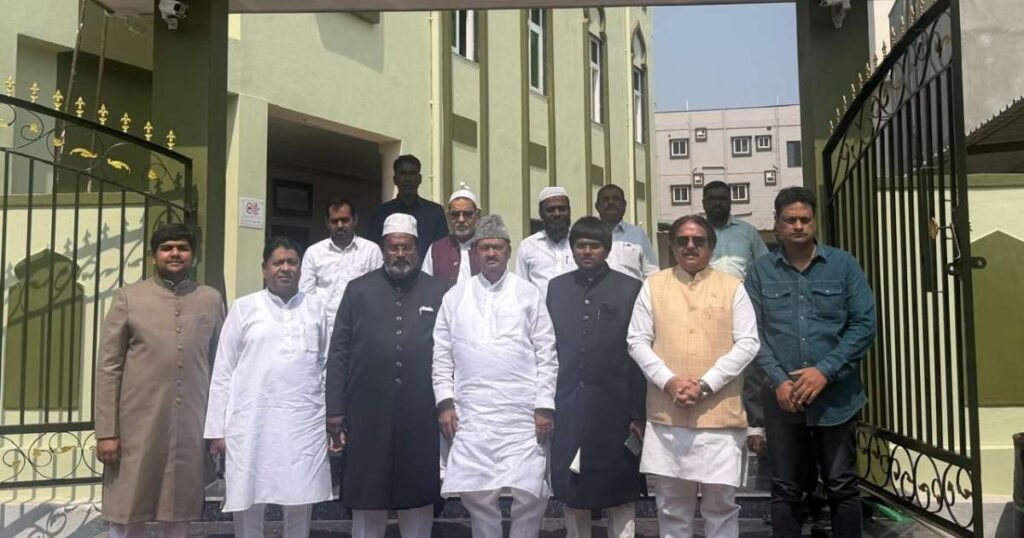
· Shabbir Ali inaugurates Masjid-e-Aliya Jawad in Zaheerabad
Zaheerabad, February 17: Advisor to Telangana Government Mohammed Ali Shabbir on Tuesday emphasised the importance of education, welfare measures and community responsibility while addressing a gathering after inaugurating Masjid-e-Aliya Jawad in Aswin Colony, Adarsh Nagar, Zaheerabad. He said long-term progress for the Muslim community lay in strengthening education and making full use of welfare initiatives introduced over the past two decades.
Speaking at the inaugural function, Shabbir Ali expressed satisfaction that the mosque had been completed and said the construction of places of worship carried both spiritual and social significance. He noted that community support and collective effort had ensured the successful completion of the mosque and described it as a lasting contribution for future generations.
Referring to Islamic teachings, he said mosques were centres not only for prayer but also for discipline, unity and social responsibility. He urged the community to ensure that mosques remained vibrant through regular prayers and constructive engagement. He also called for greater participation during the holy month of Ramzan and encouraged people to discharge their zakat obligations sincerely so that no poor family remained unsupported.
Shabbir Ali devoted a major portion of his speech to education, stating that the first command in the Quran emphasised learning. He said that despite clear religious guidance on the importance of education, the Muslim community had historically lagged behind in modern educational indicators. He referred to findings that had highlighted educational backwardness and said this concern had prompted focused policy interventions during his tenure in government.
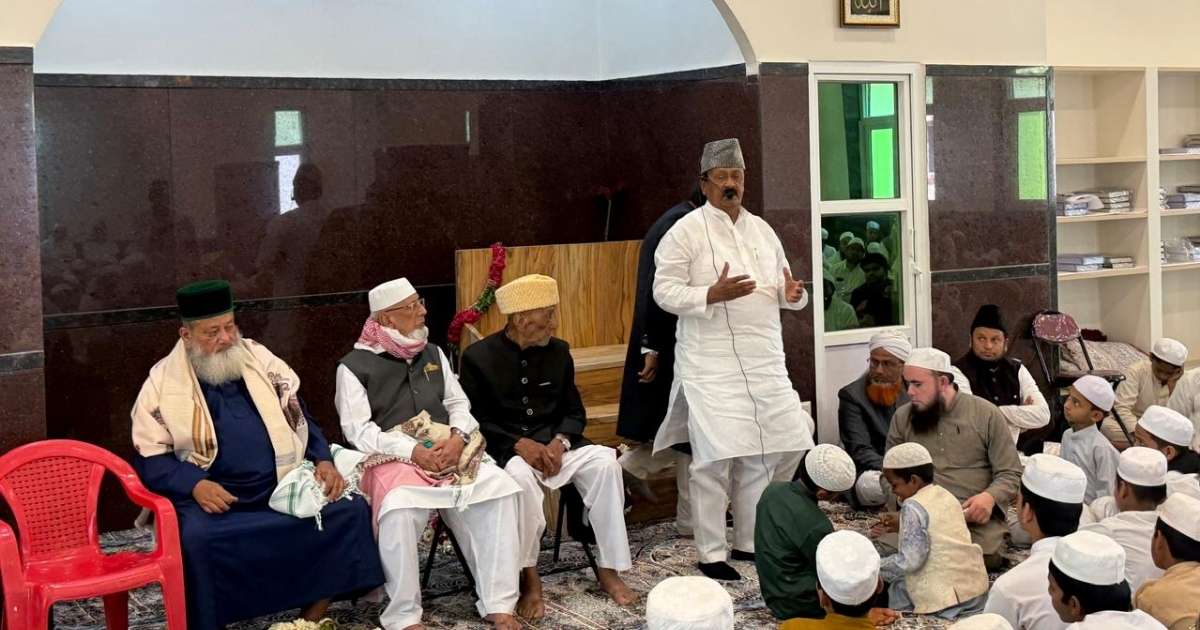
Highlighting the introduction of 4% reservation for Muslims in education and employment, he described it as a transformative measure that opened access to professional courses for thousands of students in Telangana and Andhra Pradesh. He said the policy had enabled students from economically weaker sections to pursue courses in medicine, engineering, management and other disciplines through fee reimbursement and institutional support.
He stated that over the past two decades, the reservation policy had led to a visible change in many households. According to him, families that earlier had no access to higher education now have children qualifying as doctors, engineers and other professionals. He said this shift had altered the social and economic standing of several families and contributed to broader community advancement.
Citing examples, he said many students who benefited from the reservation had gone on to specialise in advanced medical fields, including neurology and super-speciality disciplines. He added that such outcomes demonstrated the long-term value of policy decisions aimed at inclusion. He maintained that sustained emphasis on education would ensure continued representation of minorities in diverse sectors, including healthcare, law, science and administration.
Shabbir Ali also referred to the expansion of medical and professional education opportunities in the state. He noted that the availability of increased seats in medical colleges and the strengthening of law colleges had created new pathways for students from disadvantaged backgrounds. He said government initiatives had expanded access to professional education in recent years, which needed to be fully utilised by eligible students.
Addressing madrasa management committees, he underlined the need to integrate modern education with religious instruction. He suggested that along with Quranic studies, institutions should introduce computer education and English language training so that students were equipped to engage with contemporary systems. He said that combining religious and modern education would ensure that students did not feel disadvantaged in competitive environments.
He further stressed the importance of discipline and social harmony during religious programmes. He urged organisers to conduct events in a manner that respected neighbours and maintained civic responsibility. According to him, responsible conduct strengthened the image of the community and reflected the teachings of Islam.
On the issue of unity, Shabbir Ali called for overcoming internal divisions and focusing on collective progress. He said differences of opinion should not weaken broader community interests and that unity was essential for social and political representation. He urged people to participate actively in democratic processes and exercise their voting rights responsibly.
Concluding his address, he appealed to the gathering to use the upcoming month of Ramzan for spiritual reflection as well as social outreach. He emphasised that charity, education and unity were key pillars for sustainable progress. He thanked the mosque committee, religious scholars and local residents for their efforts in completing the project and said such initiatives strengthened both faith and social development.
The event was attended by religious scholars and community leaders including renowned cleric Moulana Mufti Dr Mohammed Saifullah, Meer Jawad Ali Guttedar and Masjid President Meer Jaweed Ali Guttedar. (eom)