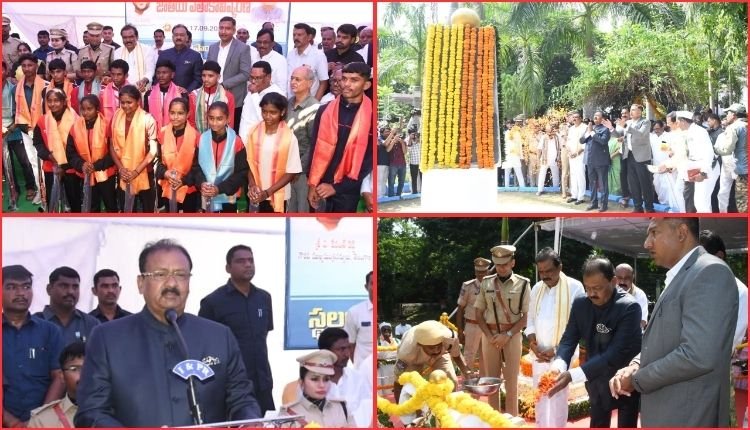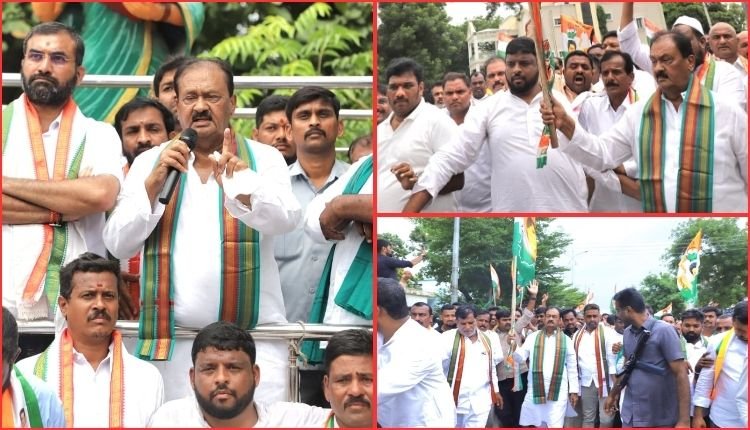
Hyderabad, September 2: Advisor to the Telangana Government Mohammed Ali Shabbir on Wednesday said the Congress Government was determined to resolve problems being faced by people and ensure that genuine beneficiaries were not denied welfare schemes because of procedural hurdles, lack of awareness or deficiencies in applications.
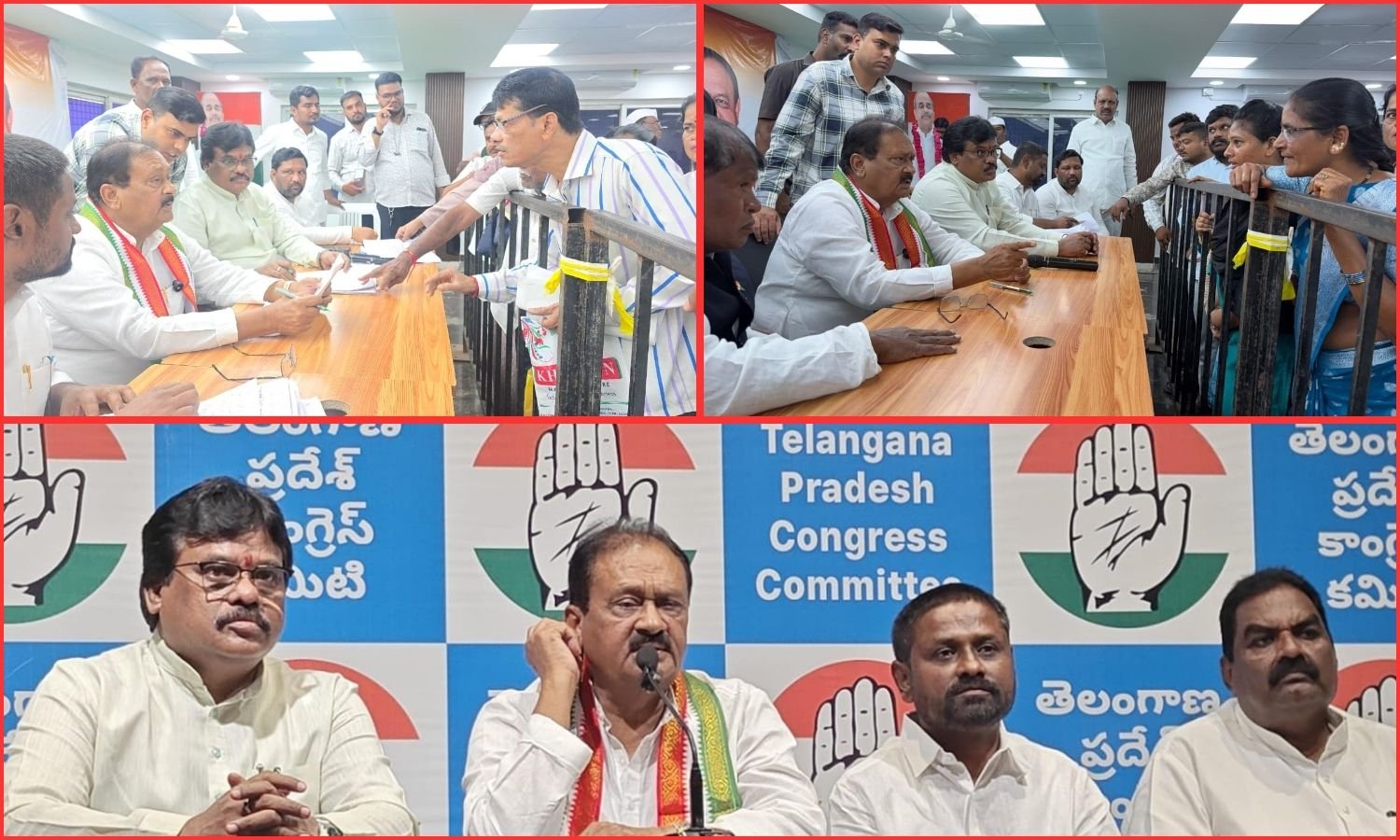
Speaking after participating in the face-to-face programme at Gandhi Bhavan, Shabbir Ali said 78 petitions were received on issues including ration cards, double-bedroom houses, Indiramma housing, land and passbook-related matters, and admissions in government schools and colleges.
He said the programme was also helping the party and the government assess whether welfare schemes were actually reaching people at the grassroots level. This was his second participation in the initiative, and he said the programme had been organised in a more systematic and effective manner this time.
Shabbir Ali said some applicants were arriving without properly prepared representations, prompting the organisers to arrange assistance at Gandhi Bhavan itself. Applications were being written, deficiencies rectified and cases scrutinised before being forwarded to the departments concerned.
He said the team was also contacting departmental officials and district Collectors directly wherever necessary to seek resolution of genuine grievances in accordance with government rules.
Expressing surprise that some families still did not possess ration cards, Shabbir Ali said the government had repeatedly appealed to eligible people to come forward and obtain them. He said such cases showed that lack of information and awareness continued to prevent some families from accessing welfare benefits.
He cited the case of the wife of a long-time Congress worker who approached the programme saying that her family still had neither a ration card nor a house despite her husband having worked for the party for several years.
On housing, Shabbir Ali said some petitioners were seeking allotment of double-bedroom houses constructed during the previous BRS government, with certain houses now being allotted through a lottery system. Others had approached the programme with grievances relating to Indiramma houses.
He said there were cases in which beneficiaries had received the first instalment after completing the basement stage but subsequent payments were stopped because official records showed ownership of a motorcycle, car or tractor. Such cases were being examined individually and referred to the officials concerned.
Shabbir Ali said several petitioners had already approached Prajavani and other offices more than once but continued to face difficulties because they did not understand the reasons for rejection of their applications.
He said such applicants were being counselled and informed about the documents or corrections required to remove deficiencies and, wherever permissible, enable their applications to become eligible again in the online system.
Even elderly people aged between 85 and 90 years were coming to Gandhi Bhavan with grievances, he said, adding that the team was explaining the procedures to them in language they could understand.
He said every request could not automatically be approved merely because an application had been submitted, as benefits had to be sanctioned under prescribed rules. However, the Congress would recommend genuine cases and make every effort to provide either a solution or a clear response.
Shabbir Ali said the programme, for which TPCC president Mahesh Kumar Goud had constituted a team, was functioning as a bridge between the government, the Congress party and the public.
He appreciated Senior General Secretary Jagadish and his team for organising the initiative and also thanked Chief Minister A. Revanth Reddy and Mahesh Kumar Goud for creating a platform through which people could directly raise unresolved issues.
He said some beneficiaries had returned to inform the organisers that earlier grievances had been resolved, including cases in which ration cards were issued. Some of them were now seeking housing assistance.
Referring to education, Shabbir Ali said an increasing number of parents were seeking admissions for their children in government schools, colleges and BC, Minority, SC and ST Gurukul institutions.
He said some parents who had earlier enrolled their children in private institutions now wanted to shift them to government institutions because of facilities such as breakfast, uniforms and improved quality of education and amenities.
Shabbir Ali said there was growing confidence among parents in government education. He alleged that around 4,000 schools had been closed during the previous BRS regime and claimed that many of them were now being reopened or made functional again.
He said there had earlier been concern over poor enrolment in government Intermediate colleges, particularly in rural areas, but that situation was changing and admissions were now becoming competitive in several institutions.
Citing an example from a recent review, Shabbir Ali said enrolment at one Intermediate college had risen from about 600 students to 1,200 this year.
He said the institution, which had 12 rooms, had sought sanction for another 12 to accommodate the increased intake. The government, he said, was prepared to provide funds for additional rooms and infrastructure where required, including expenditure of around Rs 20 lakh in such cases.
He credited Chief Minister Revanth Reddy, who also oversees the Education portfolio, with measures aimed at strengthening government schools and colleges.
Shabbir Ali referred to the provision of breakfast, better uniforms and improved food quality, along with enhancement of diet charges by about 40 per cent and certain student-related charges by up to 200 per cent. He also cited teacher appointments and infrastructure improvements as factors contributing to renewed confidence in government education.
He said the objective of the face-to-face programme was not merely to collect petitions but to ensure that people who approached Gandhi Bhavan with hope received proper guidance and follow-up.
“We will make every possible effort to ensure that those who come here with trust and expectation do not return disappointed or lose confidence in the system,” he said. (eom)